

Before the snow fell, Oklahoma made it official and not a moment too soon.
At last, following Joe Castiglione’s proclamation the ’25–’26 academic year would be his last as Sooner athletics director, the guy taking his place has finally been announced.
Or so it would appear.
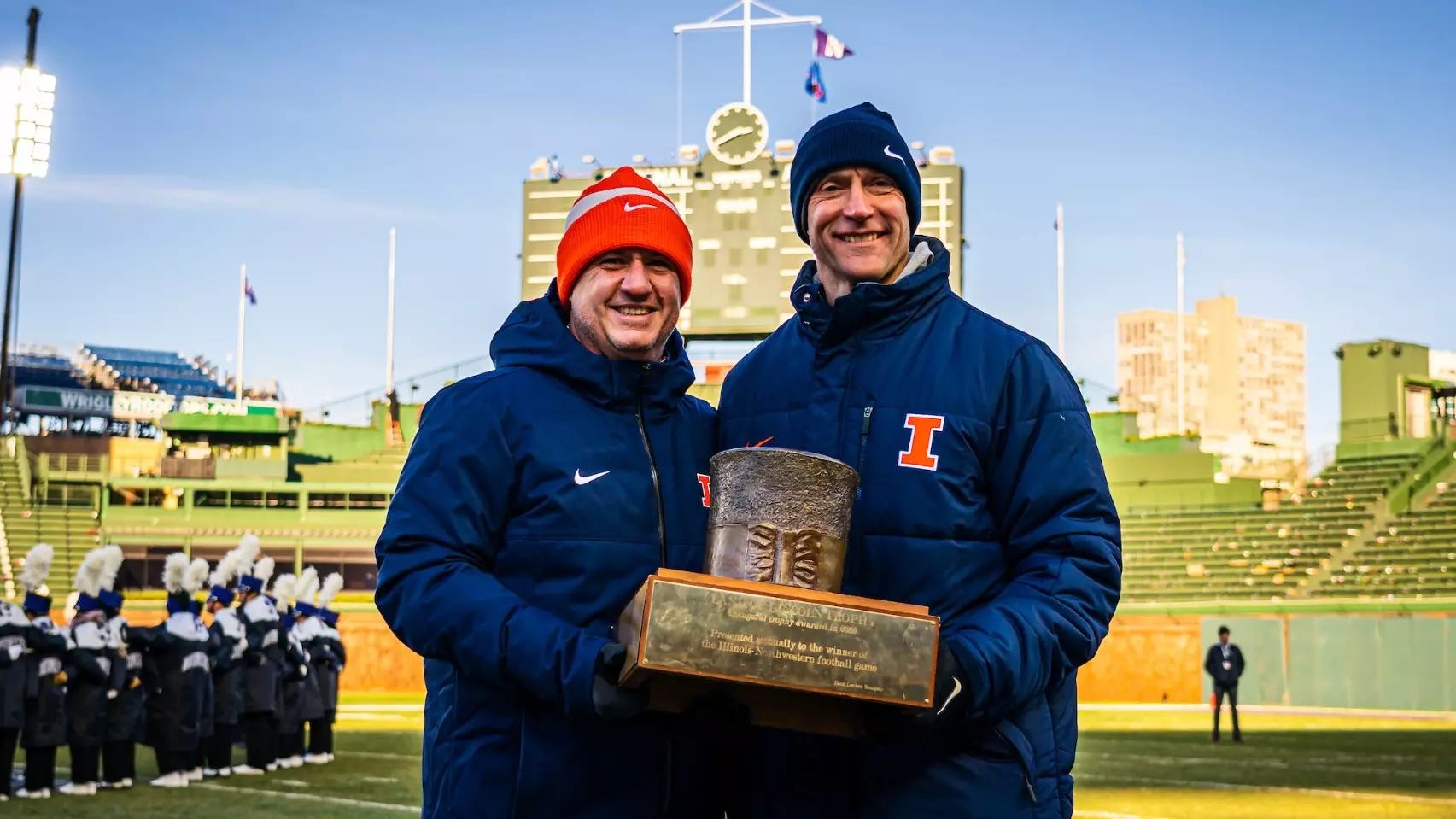
His name is Roger Denny, and he’s leaving Champaign for Norman. Champaign as in Illinois, where he has been the Fighting Illini’s deputy athletic director and the department’s chief operating officer.
If it’s a little surprising OU went and got somebody else’s assistant rather than another school’s top guy or gal, this portion of the press release announcing Denny’s hire may help explain why.
“Denny oversees all athletics business operations at Illinois, including a budget that approaches $200 million, and he has played a central role in Illinois’ name-image-likeness strategy, expanding opportunities for Illinois student-athletes. He has become increasingly involved in fundraising and played a pivotal role in securing a $100 million gift announced in fall 2025, the largest in Illinois history. He leads Illinois’ facilities planning, highlighted by extensive upgrades to Gies Memorial Stadium, and serves as the athletic program’s primary representative in all head coach negotiations.”
Because if you’ve been wondering what the next wave of athletic directors in this topsy-turvy, brave new world of college sports might look like, Denny’s it.
He may have the skills to excel as a conventional AD, as Castiglione did for so long, but he’s arriving at OU with a different background than the one Castiglione brought with him from Missouri to replace Steve Owens, whose primary qualification for the job was once winning the Heisman Trophy.
Denny, 43, ran the business side of Illinois athletics and didn’t enter college sports until spending almost 15 years practicing corporate law, eventually earning partner status at St. Louis firm SpencerFane LLP.
Though hired, Denny’s not on the job just yet. Presuming approval from the board of regents, a formality, his first day is expected to be Feb. 15, the day after Porter Moser’s men’s basketball team plays Georgia in its 12th conference game and three days before it heads to Knoxville to meet Tennessee in its 13th.
At least we assume it will still be Moser’s team at that point. But who knows? Perhaps Castiglione will decide it’s his responsibility to execute such unpleasantness himself.
He hired him, after all.
Heck, maybe he’ll do it just to get it done, because though it may ultimately be Denny himself, it’s not clear whose role the hiring and firing of coaches will be in the Sooners’ new athletic paradigm.
Which brings us back to my cryptic little caveat near the top of this thing:
“Or so it would appear.”
I’ll explain.
Once upon a time, the scaffolding of the OU athletic department was simple and sturdy. It went like this:
You had the president of the university, David Boren.
You had the athletic director, Joe Castiglione.
You had the coaches.
Bob Stoops said it over and over again, that much of Oklahoma’s sustained football success could be traced to that very setup, with the men above him keeping the ground beneath him firm, creating a working environment built to succeed.
Now?
Great question.
In 2024, former AT&T CEO Randall Stephenson was hired by Boren’s successor, Joe Harroz, as executive adviser to the president and athletic director. Dig through the old clippings and you might even see “chair of football” attached to his titles.
And wouldn’t you know it, Stephenson chaired the search committee that hired Denny.
So now we have Denny, clearly built to be a new breed of athletic director, one far more versed in business, resources, facilities and legalities rather than day-to-day and sport-by-sport competitiveness, which, ironically enough, may be just what a Power Four athletic department now requires to remain competitive.
Castiglione, though there’s no doubt he’s become fluent in every part of his ever-evolving job over the 28 years he’s held it, has primarily been a manager of people, with a fantastic aptitude for leadership and planning.
And the coaches?
They worked for him, if not directly, then through monitoring assistant athletic directors who worked for him.
But now?
Will Denny work for Harroz or will he work for Stephenson, who hired him, who works for Harroz? And will the coaches work for Denny, who works for Stephenson, or for Harroz, or both?
Or will they work for somebody else altogether, someone charged with overseeing the competitive side of the specific programs, separate from Denny, who’ll be busy running what’s become a billion-dollar enterprise, and therefore unavailable to manage the day-to-day concerns, resources and realities of each individual program and coach?
Once it was Boren, Castiglione and a coach.
Now it’s Harroz, Stephenson, Denny and … who, exactly?
Who will be responsible, sport by sport, for standing in the way of ineptitude, prolonged losing or — worse — the calcification of a program into irrelevancy, which is precisely what has been happening with men’s basketball for three or four seasons?
Maybe Denny can be all things.
But if he could, why has Josh Whitman held the top job at Illinois since 2016?
So much is unclear.
The person overseeing the competitive side of the department could even be Castiglione himself, who’s scheduled to assume the title of “Athletics Director Emeritus” when Denny comes aboard and hold it through his June 2028 retirement. If so, great, Sooner fans should take it.
Just so long as it doesn’t get in the way of doing what must be done with underachieving programs requiring fresh starts, which is a long way of saying, once again, men’s basketball.
Turning the page, after all, should never mean refusing to act.
Because amid all this change, one thing hasn’t changed at all and it’s the entire point of the enterprise.
Winning.
Or have we forgotten?