

I was never on board with Oklahoma entering the SEC.
I thought giving away your history was a bad idea, the Sooners would be at a competitive disadvantage without getting closer to national championships and, though the powers that be would have you believe it wasn’t all about money, I was pretty sure it was all about the money.
I was right.
What I did not see coming is the very real threat now upon us.
For instance:
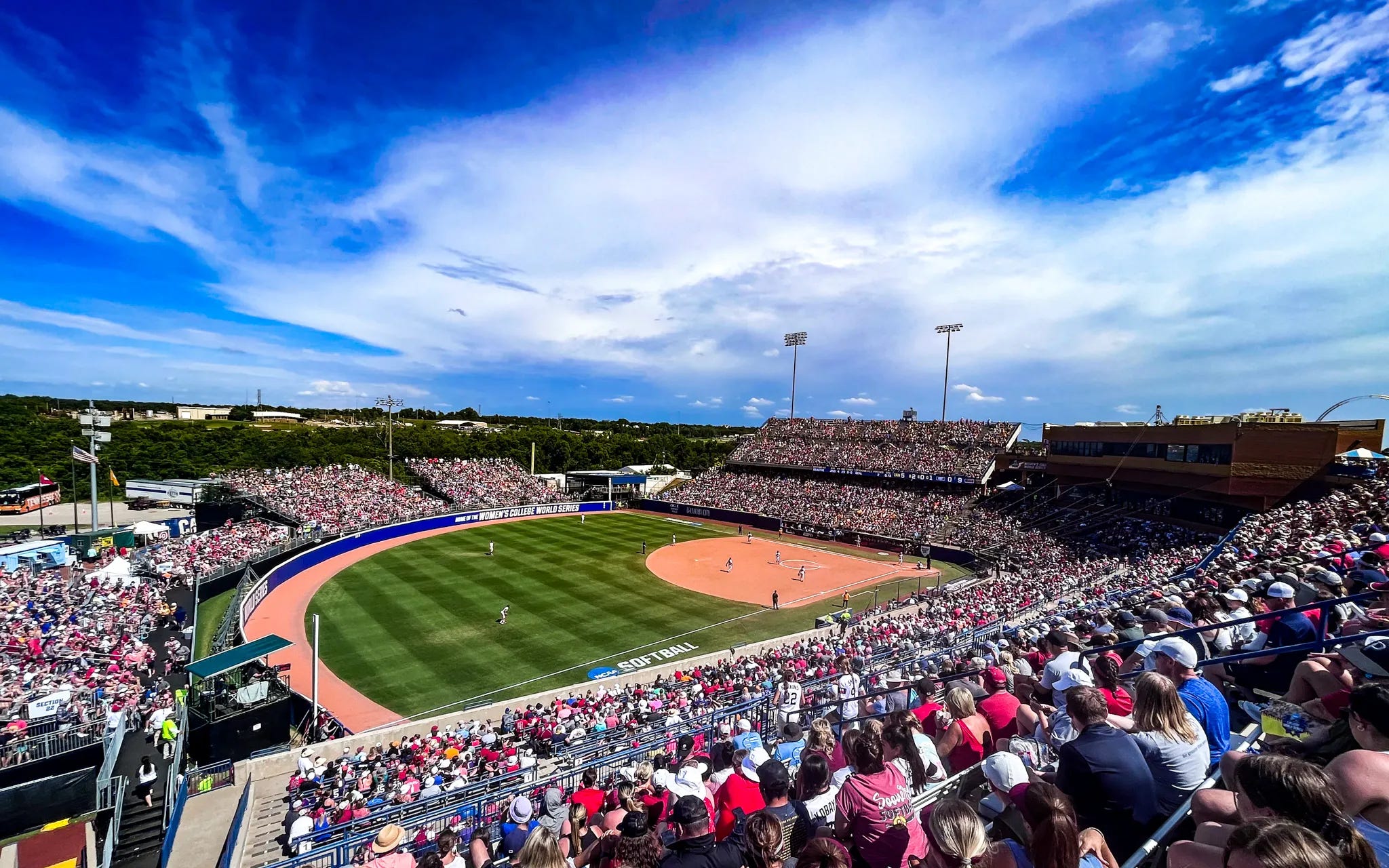
Though Oklahoma City’s under contract with the NCAA to host the Women’s College World Series through 2035, should the SEC and Big Ten not change their ways there’s a real chance OU could find itself locked out of it even as it’s played in its proverbial back yard.
No way, you say?
Try again.
It’s not even because Iowa State athletic director Jamie Pollard said one of the quiet parts out loud on Monday. Rather it’s because, for Pollard to have said it, many, many more must be thinking it.
Here that is:
“I’d turn it around and say we should break away from them. Let ’em go. But they have to go in all their sports and see how fun it is to play baseball and softball and track when it’s just the [34] of you … Let’s quit talking about it. Quit threatening. Go do it. But if you’re going to do it, you don’t just do it in football and then keep all your other sports with us. No, take ’em all. See how fun it is.”
Oh, by the way, the SEC includes 16 schools, the Big Ten 18 and 16 plus 18 equals 34.
What Pollard’s talking about is not just calling the SEC and Big Ten’s ever-present bluff to bolt the NCAA and form its own thing, but to move all in over the top of that bluff, kicking them out before they can, which, as far as I can tell, makes all the sense in the world.
The Big Ten wants 24 teams in the College Football Playoff. The SEC wants 16, neither caring one bit about conference champions, seeking unlimited at-large berths instead, because who might that benefit?
Only because they want to enlarge the bracket in differing ways does it remain a 12-team deal.
The SEC and Big 10 both wanted a larger NCAA tournament, all the better to get all of their sub-.500-in-conference-bubble squads into the brackets and, what do you know, the NCAA tournament, men and women, will move to 76 teams beginning next season.
There’s more.
In compliance with the $2.8 billion House vs. NCAA settlement, agreed upon by the ACC, Big 12, SEC and Big Ten, the College Sports Commission has been up and running since June of last year to do what the NCAA can’t.
• Enforce and oversee the settlement’s established annual revenue-sharing limit schools may pay their athletes, a scheduled $21.3 million the next academic year.
• Vet, approve and manage all third-party NIL deals in excess of $600, thus rejecting NIL deals that aren’t NIL deals at all, but pay-to-play salaries instead.
You may be able to guess what’s happened since:
Despite signing off on the settlement, the SEC and Big Ten would now like to torch it. Or, perhaps, leave.
That’s what Pollard was talking about. Don’t just encourage or accept their exit, preemptively kick them out before they do, sending all their teams with them.
Yahoo senior college football reporter Ross Dellenger makes the conflict clear:
While the NCAA’s landmark House settlement opened a path for schools to directly pay athletes up to a per-school, annual revenue-share cap ($21.3M in 2026-27), certain high-value third-party pay to athletes from boosters and those affiliated closely with a university is prohibited.
That policy is now in direct conflict with the commission’s own founders and operators: the power conference schools themselves, who, during a hotly competitive football portal, promised to athletes millions in NIL from multimedia rights partners, corporate sponsors and apparel brands — some of which do not meet legitimacy standards.
Do you see?
It’s a clear case of the richest two conferences (and select schools in other conferences, like, say, Texas Tech), deciding, hey, you know what, this agreement is cramping our style; we don’t really want a level playing field; we thought we’d get our way like we always have; we knew NIL collectives were NIL in name only, a creative way to pay players directly and we knew our boosters would pay more and more and more like they always have.
But can the CSC keep the SEC and Big Ten from playing that game?
If they can, would the conferences bolt the establishment and play for their own crowns? If they can’t, would the other conferences force them out, making them play for their own crowns?
If it’s either of those, say goodbye to the Sooners in the WCWS and every other NCAA championship.
It’s simple.
Can the SEC and Big Ten, realizing they’ve rigged the system long enough, finally get with a program they’ve already agreed to?
Or can they not, deciding it would be more lucrative to go it alone, believing their fans and television partners will keep supporting them as they always have, even as the championships they play for are not remotely national?
The choice is easy.
Doesn’t mean they’ll take it.
Fandom as we know it hangs in the balance.